Does the model suit your lighting task?
In this selection, the Luminette 3 light therapy glasses stand for a wearable light application with fixed intensity levels. That is a narrower and more honest statement than a blanket “good” or “bad”. A lamp can be technically sound and still disappoint in the wrong place. This review therefore starts with the intended use, not with a score.
According to the manufacturer, the Luminette 3 works with 500, 1000 and 1500 lux and not with the 10,000 lux of a classic SAD lamp. Because the light source sits directly at the eye, a measuring distance is not defined. The values are therefore not directly comparable with a floor-standing lamp.
For this model there are 5 readable product features from the Amazon listing. They are not presented as independently confirmed measured values. We explicitly separate what the source states from our practical assessment. We do not claim any long-term, laboratory or room trials of our own. We reproduce the quoted listing texts unchanged in content, but apply the house style for punctuation: dashes become a colon or comma, ranges are written out with “to”, and special characters and advertising symbols are removed. Numbers, units and statements are left untouched.
Product data and sources
| Product | Luminette 3 light therapy glasses |
|---|---|
| Brand | Luminette |
| Category | SAD lamps |
| ASIN | B07VMRRB9Y |
| Sources as of | 24 July 2026 |
| Type of research | Data and source analysis; no laboratory or long-term trial of our own |
Listing detail: Light therapy on the go, enjoy our…
What the source says: Light therapy on the go, enjoy our light therapy products, no matter what you are doing and where you are. You can comfortably wear the Luminette blue light glasses during your daily activities, whether making breakfast, brushing your teeth, working from home or out and about. Ideal for everyone who does not feel like sitting still for 30 minutes in front of a sunlight lamp.
Why this matters: This statement describes a product feature, but does not yet answer whether it is practical for a wearable light application with fixed intensity levels. What is decisive is the link to the planned place of use.
Listing detail: Brighten your mood & sleep better, this wearable…
What the source says: Brighten your mood & sleep better, this wearable sunlight LED glasses emit a blue-enriched, white LED light in 3 intensity levels (500, 1000 and 1500 lux) that demonstrably lifts your mood in winter and improves the sleep-wake rhythm. An independent clinical study has shown that the Luminette light therapy glasses offer the same positive effects as a 10,000 lux therapy lamp.
Why it matters: A lux figure must always come with the measuring distance. As this distance grows, markedly less illuminance reaches the eye or the work surface.
Listing detail: Simple & comfortable, the wearable light therapy glasses…
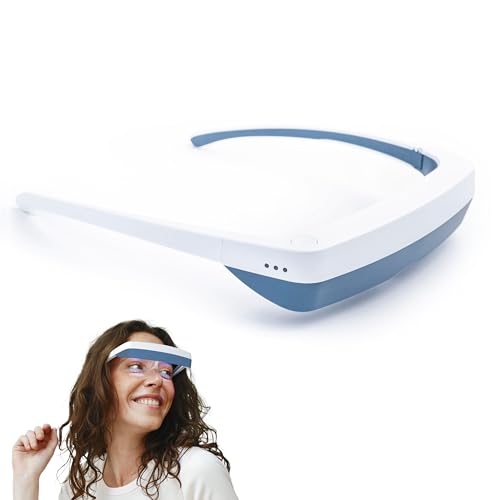
What the source says: Simple & comfortable, the wearable Luminette 3 light therapy glasses are particularly pleasant to wear, even over longer periods, with their slim profile of only 3 cm and a weight of just 53 grams. The glasses come in one size, and the flexible arms can be individually adjusted to any head shape. One battery charge lasts for 5 to 10 uses, giving you maximum freedom and independence.
Why this matters: For everyday use, runtime, charging method and behaviour at low battery level matter more than mobility alone. These values should be checked in the current manual or listing.
Listing detail: Patented design, the patented lighting system…
What the source says: Patented design, the patented lighting system of the Luminette 3 ensures optimal light delivery without impairing your field of vision. The glasses are designed so that they can be worn without problems with prescription glasses or contact lenses.
Why this matters: This statement describes a product feature, but does not yet answer whether it is practical for a wearable light application with fixed intensity levels. What is decisive is the link to the planned place of use.
Listing detail: Safe & certified, since 2006…
What the source says: Safe & certified, since 2006 the Luminette glasses have been used safely by over 300,000 users to combat winter blues, sleep disorders and lack of energy. The device is certified as risk-free under the European standard IEC 62471 on photobiological safety.
Why this matters: This point should be checked against the dimensions, instructions and existing installation before you buy. A listing can contain variants or shortened wording.
Use in daily life
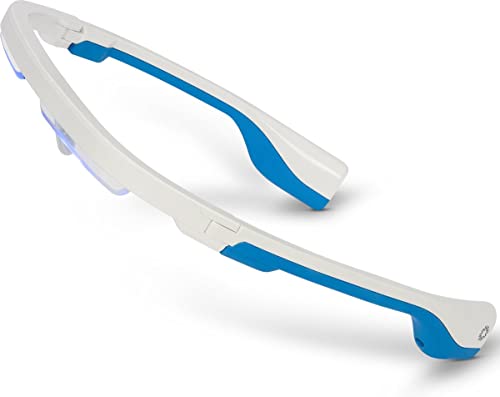
The practical advantage is freedom of movement: the glasses are worn, and you are not tied to a seat during use. The practical disadvantage is how well they sit on the nose, especially together with prescription glasses.
For this model, the purchase decision should therefore hinge on a concrete situation. Before buying, write a sentence such as: “I need light for …” and add place, time of day and activity. If the model does not clearly fulfil this task, an alternative from the same category is probably the better choice.
On the checked manufacturer pages, Luminette does not state a classification as a medical device, but refers to the standard IEC 62471 on photobiological safety. Light application does not replace medical treatment. With eye conditions, photosensitising medication or mental health conditions, it belongs in expert hands beforehand.
Strengths and limits of the assessment
What speaks for the model
- Product image, ASIN and listing data are clearly linked to one another.
- The design can be matched to a specific lighting task: for a wearable light application with fixed intensity levels.
- The available features allow a targeted check before buying, without inventing a star rating.
What remains open
- No long-term use of our own, no light measurement and no documented load check.
- Listing details can be abbreviated or change with variants and model updates.
- Room effect, glare and ease of use depend on your location and daily routine.
Efficacy promises from product advertising are problematic. Wording such as demonstrably or the reference to a clinical study without a source are seller statements and not a verified effect. Equating it with a 10,000 lux lamp also does not hold, because the light source sits directly in front of the eye.
What you should measure and check before buying
First check whether the glasses fit together with your prescription glasses or contact lenses and whether you are willing to wear them for 20 to 60 minutes at a time. The manufacturer gives no measuring distance for the lux values, so distance planning does not apply.
- Define the use: Write down at what time of day and for how long you want to wear the glasses.
- Think through wearing: Clarify head shape, arm adjustment, suitability for glasses wearers and whether you can wear the device in the morning while doing other things.
- Match the levels: Check whether the combination of intensity level and duration of use fits into your morning.
- Clarify health: Have pre-existing eye conditions, medication and existing treatments clarified with a professional beforehand.
- Check the variant: Delivery contents, battery runtime and accessories can differ within a listing.
If you are unsure how much light your room needs at all, work it out once: the lumens-to-watts chart translates wattage figures into actual brightness, and how many lumens per room you need depends on floor area and activity. More models in this area are listed in the overview of SAD lamps, and the lighting calculator turns your room into a concrete target brightness.
Set-up, position and first check
Read the instructions in full before the first use. Keep to the combination of intensity level and duration of use that the manufacturer specifies: 500 lux for 60 minutes, 1000 lux for 30 minutes, 1500 lux for 20 minutes. The glasses shine into the eye from above, and looking directly into the light bar is not the aim.
After set-up, do not judge the light only in daylight. In the evening, switch the rest of the lighting as you normally use it, and check the situation from seated, standing and walking height. Only then do disturbing reflections, hard shadows or an unfavourable switch position become visible.
Keep the manual and model designation. This helps with spare parts, with a later query about the product and in a guarantee claim. Replacing the light source is not intended; at the end of its lifetime the whole device is replaced.
Comparison with similar models
The comparison does not name winners. It shows models of the same category so that you can see whether one of them is closer to your lighting task. If two models have the same task in the Assessment column, they do not differ in purpose but in design, dimensions and features. The column then states what is actually different according to the sources.
| Model | Brand | Assessment | Details |
|---|---|---|---|
| Luminette 3 light therapy glasses | Luminette | for portable light use with fixed intensity levels | This review |
| AYOlite light glasses | AYO | for portable light use without an app and without a fixed seat, not a substitute for a SAD lamp with a documented measuring distance | Read review |
| AYO+ light therapy glasses with red light mode | AYO | for portable light use without a fixed seat, not a substitute for a SAD lamp with a documented measuring distance and not as medical treatment | Read review |
Our buying decision
The Luminette 3 light therapy glasses make sense if you are looking for a device for a wearable light application with fixed intensity levels, have checked the dimensions at the intended spot and will actually use the functions named in the listing. The purchase is less convincing if you expect a universal solution for several conflicting lighting tasks.
Keep looking if key data such as dimensions, light output, IP rating or compatibility is not clearly documented for your intended use. The same applies if you only like the look of the design, but the cable, the floor space or the controls would get in your way in daily use.
We deliberately award no stars. A numerical score would suggest a measurement accuracy that does not exist without documented hands-on testing. The statement this page can support is narrower: which details are available, what the model may be suited for, and which questions remain open before you buy?
Frequently asked questions about the light therapy glasses
Is the Luminette 3 a medical device?
The checked manufacturer pages do not state a classification as a medical device. Luminette instead refers to the standard IEC 62471 on photobiological safety.
Are 1500 lux the same as 10,000 lux from a lamp?
No. The values are not directly comparable, because the light source sits right in front of the eye and no measuring distance is defined. A pure comparison of numbers with a floor-standing lamp is therefore misleading.
How long do you wear the glasses?
The manufacturer gives 60 minutes at 500 lux, 30 minutes at 1000 lux and 20 minutes at 1500 lux. The device's instructions are what counts.
Who is the application not suitable for?
The manufacturer advises against use with retinal damage, eye conditions and for children under twelve, and requires advice from an eye specialist beforehand after cataract surgery. With photosensitising medication or mental health conditions, the use should likewise be clarified with a professional beforehand.
Sources and currency
The sources are ranked by their closeness to the product: manufacturer documents come before retailer or comparison data. A shop listing is useful for the variant currently on offer, but it is not an independent check. Missing documents are not replaced with invented experiences.
- Luminette: Luminette 3 product page
- Luminette: Instructions for use
- Luminette: Questions and answers
- Amazon product listing B07VMRRB9Y; product data via the Creators API, retrieved 24 July 2026 Advertisement
Content checked on 26 July 2026. Prices, availability and product variants can change independently of this page. For the final check, always use the current retailer listing and any available manufacturer documents.
If a linked source is no longer reachable, or the model on offer visibly differs from the product image and designation, this analysis is no longer the right basis for a decision. In that case the current model number is what counts. Tell us about the difference via the contact page (in German), so that the data, the link and the recommendation can be checked.