Does the model suit your lighting task?
Philips LED Classic A60 E27 frosted stands in this selection for warm white general light in several enclosed fittings with E27 lamp holder. It is not intended for dimmer circuits or for open fittings in which the light bulb is visible. That is a narrower and more honest statement than a blanket “good” or “bad”. A lamp can be technically decent and still disappoint in the wrong place. That is why this review begins with the intended use, not with a score.
A light bulb does not decide where the light falls, only how much of it there is and in what colour. The direction is set by the existing lamp, and the beam angle limits how wide an area below is lit. It is therefore worth looking at the lamp itself before buying: a narrow spot in a ceiling track turns more lumens into a brighter patch, not a brighter surface.
For this model there are 5 readable product features from the Amazon listing. They are not presented as independently confirmed measured values. We explicitly separate what the source states from our practical assessment. We do not claim any long-term, laboratory or room trials of our own. We reproduce the quoted listing texts unchanged in content, but apply the house style for punctuation: dashes become a colon or comma, ranges are written out with “to”, and special characters and advertising symbols are removed. Numbers, units and statements are left untouched.
Product data and sources
| Product | Philips LED Classic A60 E27 frosted |
|---|---|
| Brand | Philips |
| Category | Home lighting |
| ASIN | B0DGPZ2BS4 |
| Sources as of | 26 August 2026 |
| Type of research | Data and source analysis; no laboratory or long-term trial of our own |
Listing statement: Same dimensions as the halogen lamp, fits…
What the source says: Same dimensions as the halogen lamp, fits all applications
Why this matters: This statement describes a product feature, but it does not yet answer whether it is practical for warm white general light in several enclosed fittings with E27 lamp holder. What counts is the link to the planned location. The dimensions are right, Philips gives 104 millimetres in height at 60 millimetres in diameter, while the listing's product image says 107 millimetres. The statement that it fits all applications is not correct as it stands. Philips lists this lamp as not dimmable, so it does not belong in any dimmer circuit. It is approved for indoor lighting, but for enclosed fittings with heavy heat build-up and for outdoor operation Philips makes no commitment.
Listing statement: Made of silicone, instant warm white light (2700 K)…
What the source says: Made of silicone, instant warm white light (2700 K), as with conventional incandescent / halogen lamps
Why this matters: The stated colour temperature describes the effect, not the brightness. In everyday use it matters whether fixed steps or a continuous range are offered and whether the setting is saved. Neither of the two accessible Philips documents mentions silicone. For the outgoing frosted version Philips gives plastic as the bulb material, for the current clear version glass. What the packaging advertises is the soft plastic cover, which makes this design less prone to breakage than a glass lamp. Documented are the colour temperature of 2,700 kelvin and the instant brightness, because for this lamp range Philips gives a warm-up time of half a second to 60 per cent light.
Listing statement: State-of-the-art LED technology, with a long lifetime…
What the source says: State-of-the-art LED technology, with a long lifetime of 15,000 hours
Why this matters: For the classification, what counts is whether this feature brings a concrete advantage in everyday use. Without a matching lighting task it remains mainly a data sheet item. Philips confirms the 15,000 hours for both generations. More interesting is the figure that the listing does not state: the switching cycles. The outgoing frosted version stated 50,000 switching cycles, the current clear version only 20,000. For hallways, bathrooms and stairwells this is exactly the critical quantity, because the light is switched often there and rarely stays on for long. Which of the two values applies to this frosted pack is not settled by any accessible document.
Listing statement: The Philips LED lamps have a lower…
What the source says: The Philips LED lamps have a lower energy consumption and high colour rendering for vivid white tones
Why this matters: This statement describes a product feature, but it does not yet answer whether it is practical for warm white general light in several enclosed fittings with E27 lamp holder. What counts is the link to the planned location. The colour rendering index is 80 according to Philips, which is the statutory minimum level for domestic lamps. It is not high: anyone who wants to see wood, textiles and skin tones more naturally will find lamps with Ra 90 and above. The low consumption, on the other hand, is documented: Philips gives 7 kilowatt hours per 1,000 operating hours, against 8 for the predecessor and 60 for an old incandescent bulb of the same brightness.
Listing statement: Thanks to the beam angle you can light whole rooms…
What the source says: Thanks to the beam angle you can light whole rooms and accents
Why this matters: This point should be checked against dimensions, manual and existing installation before buying. A listing can contain variants or shortened wording. An A60 lamp with a frosted bulb radiates almost all round, the packaging says 360 degrees, and Philips gives 330 degrees for the sister model. That is exactly what makes it a good room lamp and a poor accent lamp: for accents you need a directional light source such as a reflector with a GU10 cap and a narrow beam angle. At 806 lumens a single lamp replaces the classic 60-watt incandescent bulb, which is too little for a living room on its own.
Use in daily life
Light bulb, lamp and control form a system. A matching lamp holder alone is not enough. Light output, colour temperature, dimmability and an existing dimmer must also fit together.
For this model, the purchase decision should therefore hinge on a concrete situation. Before buying, write a sentence such as: “I need light for …” and add place, time of day and activity. If the model does not clearly fulfil this task, an alternative from the same category is probably the better choice.
A light bulb is neither hard-wired nor charged, so bathroom zones and electrical installation drop out as purchase hurdles. What matters instead is whether cap, shape and installation depth fit the existing lamp. With dimmable models, the dimmer already fitted comes into play: it must support the type and reach its minimum load, otherwise the light flickers or cannot be dimmed all the way down.
Strengths and limits of the assessment
What speaks for the model
- Product image, ASIN and listing data are clearly linked to one another.
- The design can be matched to a specific lighting task: for warm white general light in several enclosed fittings with E27 lamp holder, not for dimmer circuits and not for open fittings in which the light bulb is visible.
- The available features allow a targeted check before buying, without inventing a star rating.
What remains open
- No long-term use of our own, no light measurement and no documented load check.
- Listing details can be abbreviated or change with variants and model updates.
- Room effect, glare and ease of use depend on your location and daily routine.
The most frequent annoyance arises at the dimmer: six non-dimmable lamps in a dimmer circuit flicker, hum or fail to start, and the dimmer itself can be damaged in the process. The second wrong purchase is the look: a frosted bulb in an open lamp holder in which the light bulb is visible appears as a bright ball and not as a warm filament. The third is the brightness expectation, because 806 lumens is a 60-watt incandescent bulb and not living room lighting from a single source. And anyone who reads the advertising New Generation as a big leap ends up buying one saved watt per lamp.
What you should measure and check before buying
First look at your light switches: if one of the circuits has a dimmer, this six-pack is the wrong choice there, because Philips lists this lamp as not dimmable. Then measure the space in the lampshade: the lamp is around 104 to 107 millimetres tall at 60 millimetres in diameter. Third, check whether your lamp holders are really E27 and not E14. And if you want to use the lamps in a hallway, bathroom or stairwell, read the number of switching cycles on the packaging, because that is what decides durability there.
- Define the task: Write down which surface or zone is to be lit and at what time of day you use it.
- Measure the space: Check cap, bulb length and diameter against the space in the existing lamp. Floor space, cable route and socket do not apply to this design. Product photos are no substitute for dimensions.
- Compare the light data: Check light output, colour temperature, dimming and, if needed, IP rating in the current listing or manual.
- Think through the controls: The switch, app, sensor or remote control must be reachable and understandable in daily use at the planned location.
- Check the variant: Colour, size, set contents and lamp holder can differ within a listing. Compare the variant you choose with this analysis.
If you are unsure how much light your room needs at all, work it out once: the lumens-to-watts chart translates wattage figures into actual brightness, and how many lumens per room are needed depends on area and activity. Further models from this area are in the overview under home lighting, and the lighting calculator translates your room into a concrete target brightness.
Set-up, position and first check
Assign each lamp to exactly one task. Then check colour temperature, controls and possible glare in the evening. For permanently installed lamps, the installation instructions must match the existing connection; improvised solutions are not a good basis.
After set-up, do not judge the light only in daylight. In the evening, switch the rest of the lighting as you normally use it, and check the situation from seated, standing and walking height. Only then do disturbing reflections, hard shadows or an unfavourable switch position become visible.
Keep the instructions and the model designation. This helps with spare parts, with a later query about the product and in a guarantee claim. The light bulb and lamp holder remain replaceable, so a later change of brightness or colour temperature is possible.
Comparison with similar models
The comparison does not name winners. It shows models of the same category so that you can see whether one of them is closer to your lighting task. If two models have the same task in the Assessment column, they do not differ in purpose but in design, dimensions and features. The column then states what is actually different according to the sources.
| Model | Brand | Assessment | Details |
|---|---|---|---|
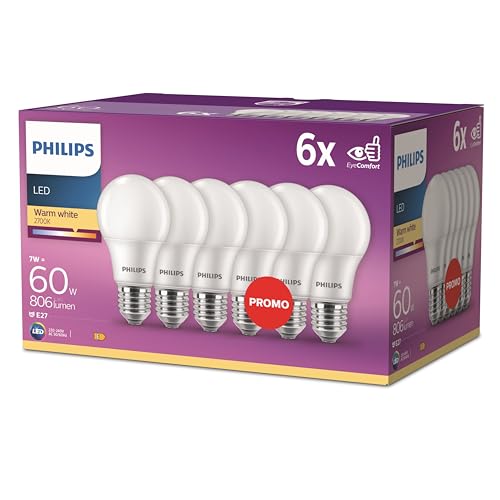
| Philips LED Classic A60 E27 frosted | Philips | for warm white general light in several enclosed luminaires with an E27 lamp holder, not for dimmer circuits and not for open luminaires in which the light bulb is visible | This review |
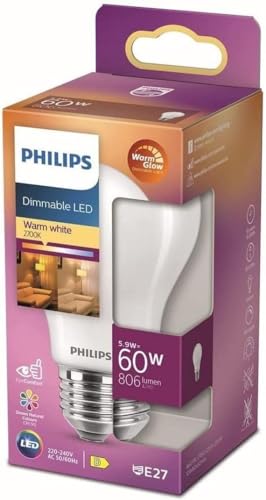
| PHILIPS LED Classic E27 WarmGlow lamp | Philips | for an existing, technically compatible lamp holder | Read the review |
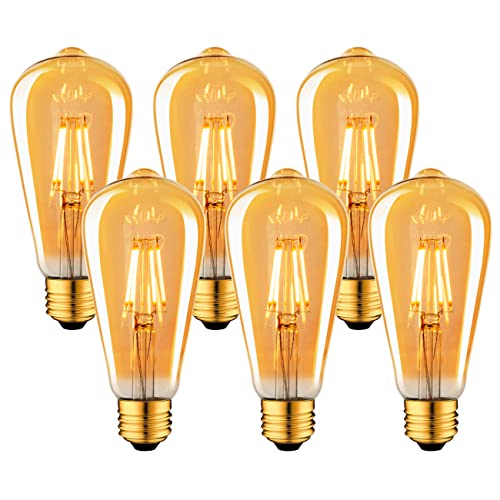
| LVWIT Edison filament lamp E27 in a six-pack, 4 W and 410 lm | LVWIT | for decorative E27 luminaires where the visible filament look matters and not the amount of light | Read the review |
Our buying decision
Philips LED Classic A60 E27 frosted makes sense if you are looking for a light bulb for warm white general light in several enclosed fittings with E27 lamp holder, have checked the dimensions at the intended spot and will actually use the functions named in the listing. The purchase is less convincing if you expect a universal solution for several conflicting lighting tasks.
Keep looking if key data such as dimensions, light output, IP rating or compatibility is not clearly documented for your intended use. The same applies if you only like the look of the design, but the cable, the floor space or the controls would get in your way in daily use.
We deliberately award no stars. A numerical score would suggest a measurement accuracy that does not exist without documented hands-on testing. The statement this page can support is narrower: which details are available, what the model may be suited for, and which questions remain open before you buy?
Frequently asked questions about the light bulb
What is actually new about the New Generation?
Exactly one point is documented: the lamp draws 7 instead of 8 watts for an unchanged 806 lumens. That raises the luminous efficacy from 100 to 115 lumens per watt and the energy efficiency class from F to E, because under Regulation (EU) 2019/2015 the class boundary is 110 lumens per watt. Colour temperature, colour rendering index and rated lifetime stay the same. Replacing lamps that still work is not worth it for this.
Is this lamp dimmable?
Philips lists both the outgoing frosted version and the current clear version of this lamp with the entry Dimmable: No, and the abbreviation ND in the product title stands for exactly that. The listing itself says nothing about it, and no dimming symbol is visible on the packaging. Assume therefore that these lamps will flicker, hum or not start at all on a wall dimmer, and check your switches before buying rather than the lamp.
How bright are 806 lumens in everyday use?
806 lumens are the replacement for an old 60-watt incandescent bulb. That is enough for a ceiling light in a hallway, bathroom or bedroom, but for a living room ceiling a single lamp of this class is too dim. A six-pack therefore suits multi-lamp fittings or several small fittings in the same room. The frosted bulb spreads the light evenly, which is an advantage in enclosed shades and a disadvantage in open lamp holders.
Why does the listing say 60 watts three times?
Because the attribute table has written the replacement value of the old incandescent bulb into the fields for actual power. The lamp draws 7 watts, which is stated on the packaging as well as in the Philips data and in the EPREL registration. The fields energy source dc, control type touch, bulb shape size A19 and white brightness 850 lumens are also wrong or contradictory in this table. Rely on the packaging photo and the manufacturer data.
How does this lamp differ from the Philips filament lamp in the six-pack?
The difference is first visual and then arithmetic. This lamp has a frosted bulb and glows as an even surface, while the filament lamp has a clear bulb with a visible filament. The filament lamp delivers 470 lumens at 4.3 watts and so replaces a 40-watt incandescent bulb, while this one delivers 806 lumens at 7 watts and replaces a 60-watt incandescent bulb. According to the Philips data neither is dimmable, so they do not differ in that respect.
How long do the lamps actually last?
Philips gives a rated lifetime of 15,000 hours, which at three hours a day is around 13.7 years per lamp. More important than this figure, in rooms where the light is switched often, is the number of switching cycles, and this is exactly where the sources are unclear: the outgoing frosted version stated 50,000 cycles, the current clear version only 20,000. For hallways and stairwells it is therefore worth checking the packaging before you fit all six lamps there.
Sources and currency
The sources are ranked by their closeness to the product: manufacturer documents come before retailer or comparison data. A shop listing is useful for the variant currently on offer, but it is not an independent check. Missing documents are not replaced with invented experiences.
- Listing page for ASIN B0DGPZ2BS4. The bullet points state the same dimensions as the halogen lamp, made of silicone, instant warm white light at 2,700 kelvin, a lifetime of 15,000 hours, low energy consumption with high colour rendering and a beam angle for rooms and accents. The attribute table gives brand Philips, light type LED, special features eye-friendly and high efficiency, cap E27, equivalent to 60 watt incandescent, light colour warm white, 2,700 kelvin, maximum light output 806 lumens, light source lifetime 15,000 hours, permitted voltage frequency 220 to 240 volts and 50 hertz, energy efficiency class for light bulbs E. Alongside these, the same table contains the unsuitable fields wattage 60 watts, power consumption 60 watts, light source wattage 60 watts, bulb shape size A19, energy source dc, control type touch and white brightness 850 lumens. The packaging photo shows a six-pack with the printed text 7W equals 60W, 806 lumen, E27, 2700K, 220 to 240V AC 50/60Hz, the EyeComfort mark and the energy label E. Amazon.co.uk listing B0DGPZ2BS4, not linked
- Philips manufacturer page for the current version of this lamp, EAN 8721103047465. Documented are the product title LED classic 60W A60 E27 WW CL ND 6CT/4EC, material number 929001387398, cap E27, nominal luminous flux 806 lumens, power 7 watts, nominal luminous efficacy 115 lumens per watt, energy consumption 7 kilowatt hours per 1,000 hours, energy efficiency label E, colour temperature 2,700 kelvin, colour rendering index 80, rated lifetime 15,000 hours, 20,000 switching cycles, dimmable no, power factor 0.51, voltage AC 220 to 240 volts, overall height 104 millimetres at 60 millimetres width, mercury content 0 milligrams, guarantee 2 years and EPREL registration number 2136335. This page describes the clear version of the same lamp generation in the six-pack.
- Philips manufacturer page for the predecessor version with a frosted bulb, EAN 8719514257566. Documented are the product title LED 60W A60 E27 WW 230V FR ND 1PF/6 DISC, material number 929002306296, bulb finish frosted, bulb material plastic, 806 lumens, power 8 watts, nominal luminous efficacy 100 lumens per watt, energy consumption 8 kilowatt hours per 1,000 hours, energy efficiency label F, 2,700 kelvin, colour rendering index 80, rated lifetime 15,000 hours, 50,000 switching cycles, dimmable no, power factor 0.54, overall height 108 millimetres and EPREL registration number 397611. The abbreviation suffix DISC in the product title stands for the outgoing version.
- EU product database EPREL, registration 2136335 by Signify Netherlands B.V. for the model identifier 8721103047465. Entered are 806 lumens at 7 watts power consumption, energy efficiency class E, mains light source, cap E27, 2,700 kelvin, colour rendering index 80, not dimmable, lumen maintenance factor 0.93 and survival factor 0.9. The start of placing on the market is given there as 24 March 2025.
- EU product database EPREL, registration 397611 by Signify Netherlands B.V. for the predecessor version with the model identifier 9290023062. Entered are 806 lumens at 8 watts, energy efficiency class F, cap E27, 2,700 kelvin, colour rendering index 80, not dimmable, start of placing on the market 1 September 2021. Comparing the two registrations shows the difference between the generations in documented figures.
- licht.de (in German) on the energy efficiency classes of light sources since 1 September 2021, with the class boundaries for luminous efficacy: E from 110 to 134 lumens per watt and F from 85 to 109 lumens per watt. This allows the jump from 100 to 115 lumens per watt to be matched to the class boundary.
- German Environment Agency (in German) on energy consumption labelling of lamps and luminaires: Regulation (EU) 2019/2015 brought back the class scale from A to G on 1 September 2021. It is the basis of classes E and F on both Philips data sheets.
- Amazon.co.uk product listing B0DGPZ2BS4; product data via the Creators API, retrieved 26 August 2026 Advertisement
Content checked on 26 August 2026. Prices, availability and product variants may change independently of this page. For the final check, always use the current retailer listing and any manufacturer documents.
If a linked source is no longer reachable, or the model on offer visibly differs from the product image and designation, this analysis is no longer the right basis for a decision. In that case the current model number is what counts. Tell us about the difference via the contact page (in German), so that the data, the link and the recommendation can be checked.