Does the model suit your lighting task?
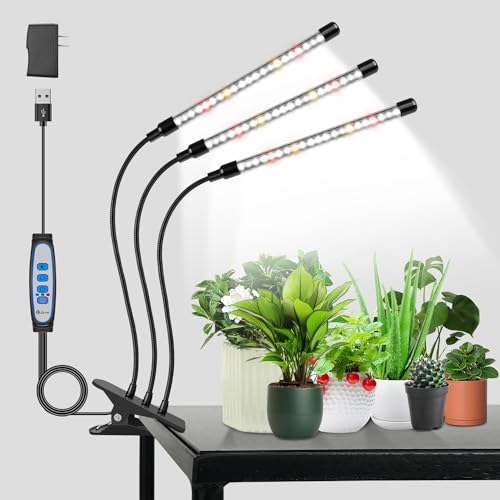
wolezek plant lamp BL-C30C, clamp light with gooseneck and daily timer stands in this selection for supplementary light for individual houseplants at short range, explicitly not as a SAD lamp for light therapy for people. That is a narrower and more honest statement than a blanket “good” or “bad”. A lamp can be technically decent and still disappoint in the wrong place. This review therefore starts with the intended use, not with a score.
For plant light, lumens are the wrong unit, and that is no nitpicking. Lumens weight light by the sensitivity of the human eye, which has its maximum in the green at around 555 nanometres. At 660 nanometres, where this lamp's red chips emit, that curve has dropped to just over six per cent. A lumen figure therefore underestimates exactly the range the plant uses most. That this listing gives no lumen figure is therefore more honest than one that says nothing.
For this model there are 5 readable product features from the Amazon listing. They are not presented as independently confirmed measured values. We explicitly separate what the source states from our practical assessment. We do not claim any long-term, laboratory or room trials of our own. We reproduce the quoted listing texts unchanged in content, but apply the house style for punctuation: dashes become a colon or comma, ranges are written out with “to”, and special characters and advertising symbols are removed. Numbers, units and statements are left untouched.
Product data and sources
| Product | wolezek plant lamp BL-C30C, clamp light with gooseneck and daily timer |
|---|---|
| Brand | wolezek |
| Category | Home lighting |
| ASIN | B0CKT5C9TN |
| Sources as of | 7 August 2026 |
| Type of research | Data and source analysis; no laboratory or long-term trial of our own |
Listing claim: Full-spectrum LED plant lamp, equipped with 660nm…
What the source says: Full-spectrum LED plant lamp, equipped with 660nm, 3000K and 6000K LED chips per strip, it promotes photosynthesis and supports plants in all growth phases: from germination through growth to flowering and fruiting.
Why this matters: The stated light colour describes the effect, not the brightness. In everyday use it matters whether fixed steps or a continuous range are offered and whether the setting is saved. This bullet point contradicts the product name, which lists 6,000 kelvin as a property of the lamp. If warm white chips at 3,000 kelvin and red chips at 660 nanometres also shine, the mixed light does not have 6,000 kelvin but is distinctly warmer. The description breaks the ratio down as 48 cool white to 6 warm white to 6 red, so 6,000 kelvin describes only the majority of the chips. Full spectrum is not a protected term and says nothing in itself. The description follows up and claims coverage from 380 to 800 nanometres, which does not follow from 48 white, 6 warm white and 6 red chips: phosphor-converted white practically drops out below about 420 and above about 700 nanometres, and a narrow-band red chip at 660 nanometres does not fill these gaps. A spectral measurement that could settle it does not exist.
Listing claim: Cycle timer function, this grow light offers…
What the source says: Cycle timer function, this grow light offers the circular memory timer function with 3 options, 6h/12h/16h, automatic switching on and off and no more daily manual operation. The 16-hour timer setting gives your plants enough light during flowering and fruiting.
Why this matters: Check how many ways of operating it there really are and whether each of them stays reachable at the planned spot. It also matters whether the device saves the last selected setting and whether an accidental touch changes a setting. The recurring daily routine is the right approach and the seller describes it that way. The most important case remains unresolved, however: what happens after a power outage is stated nowhere. Such cycle timers count from the moment voltage is applied, so the daily switch-on time shifts, and whether the selected setting survives is documented by nobody. This applies only as long as the power stays on continuously. The same listing states that this plant light is not compatible with external timers. That removes the simplest safeguard against a shifted cycle, because putting a mechanical timer in front of it is expressly ruled out.
Listing claim: Different light modes, Wolezek plant grow lights…
What the source says: Different light modes, Wolezek plant grow lights come with 3 different light modes and 5 brightness levels that meet the growing needs of plants from seedlings to flowering.
Why this matters: For the assessment, what counts is whether this feature brings a concrete benefit in everyday use. Without a matching lighting task it remains mainly a data sheet point. Whether a lamp meets a plant's needs is decided by PPFD in micromoles per square metre per second at a stated distance and by the daily light integral DLI calculated from it. Both figures are missing from the whole listing, as is a measuring distance. Without them the claim can be neither confirmed nor refuted, and you can only set the lamp by distance and observation.
Listing claim: Easy installation, with the non-slip clamp…
What the source says: Easy installation, with the non-slip clamp and the 360-degree adjustable gooseneck you can attach the grow light to any surface and set the optimum lighting angle for your plants. Supplied with adapter, you do not need to buy any additional accessories, simply connect and use.
Why this matters: Adjustability is only useful if the range of movement at the planned location stays free and the lamp holds its position reliably. The adapter is also the explanation for the wattage. The description names it as a USB power supply with 5 volts and 3 amperes, and 5 volts times 3 amperes is exactly the 15 watts from the data table. The 15 watts therefore describe the maximum output of the power supply and not the measured power consumption of the lamp.
Listing claim: Buy with confidence, we offer a…
What the source says: Buy with confidence, we offer a 24/7 customer service. If you are not satisfied with our product or any problems occur, please chat with us via Amazon, and we will provide satisfactory service for you.
Why it matters: This is a promise by the seller from the listing text, not manufacturer evidence and not an additional legal right. Your statutory consumer rights apply regardless. A voluntary guarantee only counts once its conditions are available in writing.
Use in daily life
In everyday use the clamp decides the application. It needs a free edge on a windowsill, shelf board or tabletop, and the gooseneck must bring the luminous surface from there over the plant. For clamp lights of this size the usable zone is about 10 to 30 centimetres from the leaf. For a large houseplant whose leaves spread over half a metre, that is not enough: you supply a section with it, not the whole plant.
For this model, the purchase decision should therefore hinge on a concrete situation. Before buying, write a sentence such as: “I need light for …” and add place, time of day and activity. If the model does not clearly fulfil this task, an alternative from the same category is probably the better choice.
With plant light the timer is not a convenience feature but the function on which everyday use depends. The seller describes it as recurring, but does not say what happens after a power outage. Such cycle timers count from the moment voltage is applied again, so the daily switch-on time shifts. You cannot work around it: the seller expressly rules out external timers, and that removes the otherwise simplest remedy.
Strengths and limits of the assessment
What speaks for the model
- Product image, ASIN and listing data are clearly linked to one another.
- The design can be matched to a specific lighting task: for supplementary light for individual houseplants at short range, explicitly not as a SAD lamp for light therapy for people.
- The available features allow a targeted check before buying, without inventing a star rating.
What remains open
- No long-term use of our own, no light measurement and no documented load check.
- Listing details can be abbreviated or change with variants and model updates.
- Room effect, glare and ease of use depend on your location and daily routine.
The purchase typically fails on an expectation the device never promised: that an entry-level clamp light will carry a large houseplant through the winter. Without a PPFD figure and without a measuring distance, nobody can work out in advance how much light reaches the leaf, and the only adjustable factor remains the distance, which for a clamp is limited by the design. Added to that is the documentation situation: no manufacturer website, no published data sheet, no entry in the EU product database, and a data table that claims a GU10 cap, the AR111 lamp shape and Bluetooth for this device. The practical stumbling block in the end is the timer, because it shifts after every power outage, and the obvious remedy of a mechanical timer is ruled out by the seller itself.
What you should measure and check before buying
First measure the distance you can actually give the lamp to the plant, because without a PPFD figure the distance is your only adjustable factor, and for clamp lights of this size the usable zone is about 10 to 30 centimetres from the leaf. Then check whether the clamp fits your windowsill, shelf board or tabletop: it needs a free edge, and the manufacturer figure for the lamp itself is 34.2 by 14.3 by 3.6 centimetres. Weigh the 2.5 metre cable against the route to the nearest socket, because the power supply is a plug-in adaptor and cannot be extended unless you buy accessories. And decide beforehand which of the three timer settings suits your plant, because you reset the switch-on time after every power outage and an external timer is ruled out.
- Define the plant: Clarify whether you want to supply a single plant at short range or a large one with widely spread leaves. Only the first suits this design.
- Check the clamping edge: The clamp needs a free edge. Measure the thickness and depth of the windowsill, shelf board or tabletop at the planned spot.
- Plan the distance: Without a PPFD figure the distance is your only adjustable factor. Allow 10 to 30 centimetres to the leaf and check whether the gooseneck can manage that.
- Measure the cable route: The cable measures 2.5 metres and ends at a plug-in power adaptor. An extension means accessories.
- Think through the timer: Set the daily switch-on time and expect it to shift after a power outage. The seller rules out an external timer.
If you are unsure how much light your room needs at all, work it out once: the lumens-to-watts chart translates wattage figures into actual brightness, and how many lumens per room are needed depends on area and activity. Further models from this area are in the overview under home lighting, and the lighting calculator translates your room into a concrete target brightness.
Set-up, position and first check
First set the lamp so that the luminous surface sits about 10 to 30 centimetres above the leaves, and then observe the plant over two to three weeks. Without a PPFD figure that is the only feedback available: too little light shows in long, thin shoots stretching towards the light source, too much in bleached or scorched leaf areas. Deliberately set the timer at the time of day at which the light should switch on daily from now on, and check it after every power outage.
After set-up, do not judge the light only in daylight. In the evening, switch the rest of the lighting as you normally use it, and check the situation from seated, standing and walking height. Only then do disturbing reflections, hard shadows or an unfavourable switch position become visible.
Note the model number and order date and keep whatever paperwork is in the box. For this item there is neither a manual nor a manufacturer page to download, and in a complaint the retailer is the only point of contact. Both are, in a guarantee claim, the only proof of which device you bought. Replacing the light source is not provided for, and at the end of its rated lifetime the complete device is replaced.
Comparison with similar models
The comparison does not name winners. It shows models of the same category so that you can see whether one of them is closer to your lighting task. If two models have the same task in the Assessment column, they do not differ in purpose but in design, dimensions and features. The column then states what is actually different according to the sources.
| Model | Brand | Assessment | Details |
|---|---|---|---|
| wolezek plant lamp BL-C30C | wolezek | for supplementary light for individual houseplants at short range, explicitly not as a SAD lamp for light therapy for people | This review |
| Kullsinss plant lamp BL-J20A | Kullsinss | for small houseplants and propagation at short range, explicitly not as a SAD lamp for light therapy for people | Read the review |
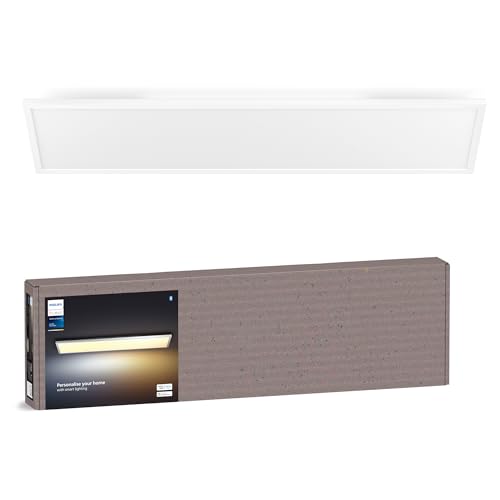
| Philips Hue White Ambiance Aurelle smart LED panel light | Philips Hue | for ambient lighting where the room and mounting size suit | Read the review |
Our buying decision
wolezek plant lamp BL-C30C, clamp light with gooseneck and daily timer makes sense if you are looking for a lamp for supplementary light for individual houseplants at short range, explicitly not as a SAD lamp for light therapy for people, have checked the dimensions at the intended spot and actually use the functions named in the listing. The purchase is less convincing if you expect a universal solution for several conflicting lighting tasks.
Keep looking if key data such as dimensions, light output, IP rating or compatibility is not clearly documented for your intended use. The same applies if you only like the look of the design, but the cable, the floor space or the controls would get in your way in daily use.
We deliberately award no stars. A numerical score would suggest a measurement accuracy that does not exist without documented hands-on testing. The statement this page can support is narrower: which details are available, what the model may be suited for, and which questions remain open before you buy?
Frequently asked questions about the clamp-on plant lamp
Can I use this lamp as a SAD lamp for myself?
It is not built for that and the seller does not claim it is. A SAD lamp for light therapy for people is described by an illuminance in lux at a stated distance and by a large, evenly lit surface, and none of that appears in this listing. This device lights a plant pot from a few centimetres away. Regardless of this, light therapy does not replace medical treatment.
Why does the listing give no lumen figure, and would one help?
A lumen figure would even be misleading here, because lumens weight light by the brightness sensitivity of the human eye, which peaks in the green at around 555 nanometres. At 660 nanometres, where this lamp's red chips emit, that curve has dropped to just over six per cent, and in deep blue to just under four per cent. The very portions a plant uses most would therefore be weighted down the most. The appropriate quantity is PPFD in micromoles per square metre per second together with the measuring distance, and that is missing here as well.
What do the 15 watts in the data table mean?
They describe the power supply, not the lamp. The description mentions a USB adapter with 5 volts and 3 amperes, and 5 volts times 3 amperes gives exactly 15 watts. The same figure results if you multiply 60 light-emitting diodes by the usual nominal value of 0.25 watts per chip. What the device actually draws in operation is documented nowhere.
Is the light really 6,000 kelvin?
The mixed light certainly is not. In the same bullet point the seller names chips at 660 nanometres, 3,000 kelvin and 6,000 kelvin, and later breaks them down as 48 cool white to 6 warm white to 6 red. As soon as warm white and red components also shine, the resulting colour temperature is well below 6,000 kelvin and looks redder. The 6,000 kelvin describe the majority of the chips, not what reaches the leaf.
What happens to the timer if the power fails?
The listing leaves that open, and it is the most important open question about this device. Cycle timers of this type count from the moment voltage is applied again, so the daily switch-on time shifts after every outage. Whether the selected setting of 6, 12 or 16 hours is retained is documented by nobody. To make matters worse, the seller expressly rules out an external timer, so you cannot fall back on a mechanical solution.
Is there a manufacturer website or data sheet for wolezek?
No. wolezek.com is registered and sits on the name servers of hichina.com, but it has no A record, no mail record and no reachable website, and eight further spellings checked, from wolezek.de to wolezek.online, do not resolve at all. In the EU product database EPREL there is not a single light source listed under WOLEZEK, while the same query returns 8,407 hits for PHILIPS. According to the scope of delivery a user manual is included with the lamp, but it is published nowhere.
Sources and currency
The sources are ranked by their closeness to the product: manufacturer documents come before retailer or comparison data. A shop listing is useful for the variant currently on offer, but it is not an independent check. Missing documents are not replaced with invented experiences.
- Listing text and data table for ASIN B0CKT5C9TN with all the figures on this page: model number BL-C30C, 60 light-emitting diodes in the ratio 48 cool white to 6 warm white to 6 red at 660 nanometres, spectrum claim 380 to 800 nanometres, input voltage 100 to 240 volts, supplied power supply as a USB adapter with 5 volts and 3 amperes, cable length 2.5 metres, data table with 15 watts, 5 volts and energy efficiency class F, dimensions 34.2 by 14.3 by 3.6 centimetres, timer over 6, 12 or 16 hours with automatic switching on again the next day. It also contains the sentence that this plant light is not compatible with external timers. Amazon listing B0CKT5C9TN, not linked
- Annex III of Regulation (EU) 2019/2020, point 3(j): horticultural light sources are described there by a photosynthetic efficacy of more than 1.2 µmol per joule and by the radiation share between 700 and 800 nanometres. The legislator therefore measures plant light in micromoles per joule and in nanometre bands, not in lumens per watt. That is the official evidence that lumens are the wrong quantity for this class of device.
- EU product database EPREL, query of the trade mark via the light source interface: under WOLEZEK there is not a single registration. The control query with the same parameters returns 8,407 entries for PHILIPS, 6,729 for LEDVANCE, 1,776 for EGLO and 365 for OSRAM, so the filter works. There is therefore no official cross-check for the energy efficiency class F in the data table.
- A sister model of the same brand, expressly named as such: the wolezek identifier B085DG31F3 with model number BL-C80A. In its data table the energy efficiency class field carries the value “highly efficient”, which is not a class at all but an advertising word. That shows how carefully this field is maintained by the brand, and puts the F for the model discussed here into context. Amazon listing B085DG31F3, not linked
- Amazon product listing B0CKT5C9TN; product data via the Creators API, retrieved 7 August 2026 Advertisement
Content checked on 10 August 2026. Prices, availability and product variants may change independently of this page. For the final check, always use the current retailer listing and any available manufacturer documents.
If a linked source is no longer reachable, or the model on offer visibly differs from the product image and designation, this analysis is no longer the right basis for a decision. In that case the current model number is what counts. Tell us about the difference via the contact page (in German), so that the data, the link and the recommendation can be checked.