Does the model suit your lighting task?
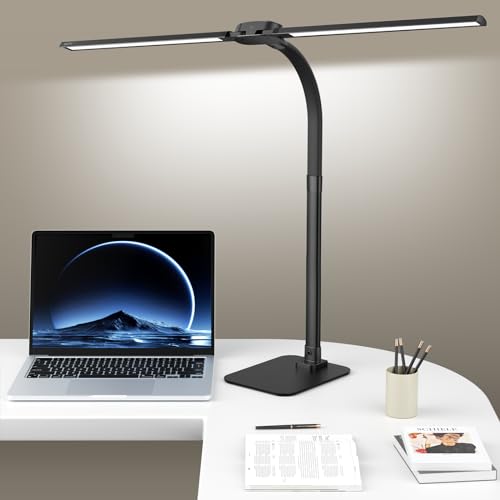
Kary LED desk lamp 24 W with double head stands in this selection for a fixed workspace without a usable table edge. That is a narrower and more honest statement than a blanket “good” or “bad”. A lamp can be technically decent and still disappoint in the wrong place. This review therefore starts with the intended use, not with a score.
A monitor light bar, a clamp lamp and a classic desk lamp solve different problems. The monitor light bar saves floor space and mainly lights the front desk area. A clamp lamp gives freedom of movement, but needs a suitable desk edge. A desk lamp is flexible, but takes up space.
The listing carries 7 usable product features. The 6 most informative are assessed individually below. They are not presented as independently confirmed measurements. We explicitly separate what the source states from our practical assessment. We do not claim any long-term, laboratory or room trials of our own. We reproduce the quoted listing texts unchanged in content, but apply our house punctuation: dashes become a colon or comma, ranges of values are written out with “to”, and special characters and advertising symbols are removed. Figures, units and statements remain untouched.
Product data and sources
| Product | Kary 24 W LED desk lamp with double head |
|---|---|
| Brand | Kary |
| Category | Desk lamps |
| ASIN | B0CKRJXGKB |
| Sources as of | 24 July 2026 |
| Type of research | Data and source analysis; no laboratory or long-term trial of our own |
Listing claim: 80CM double head & 24W power
What the source says: 80CM double head & 24W power: The ultra-wide, fold-out double lamp head and the powerful 24W output illuminate even large multi-monitor desks completely free of shadows and evenly.
Why this matters: This claim describes a product feature but does not yet answer whether it is practical for a fixed workspace without a usable table edge. What matters is the link to the planned location.
Listing claim: 90°+300° rotation & gooseneck
What the source says: 90°+300° rotation & gooseneck: The arm folds 90° horizontally and swivels 300° vertically. The flexible gooseneck allows exact light positioning to avoid screen glare.
Why this matters: Adjustability is only useful if the range of movement stays free at the planned location and the lamp holds its position reliably.
Listing claim: CRI>90 & eye-friendly light
What the source says: CRI>90 & eye-friendly light: High-quality LEDs with CRI>90 ensure absolutely true-to-life colour rendering. The flicker-free and glare-free light is easy on the eyes during hours of computer work.
Why it matters: This statement comes from the sales listing and should not be read as a medical effect. A reliable assessment would need measurement methods and limit values, which a shop listing often does not state in full.
Listing claim: Smart control & clever holder
What the source says: Smart control & clever holder: A touch switch (on/off) sits elegantly at the top of the stand. The remote control (for dimmer, colour & timer) fits precisely into a special recess in the holder, so it is always within reach and your workspace stays tidy!
Why this matters: Check how many ways of operating it there really are and whether each of them stays reachable at the planned spot. It also matters whether the device stores the last chosen level and whether an accidental touch changes a setting. With a remote control, the question of batteries belongs here too.
Listing claim: Memory function & 60-minute timer
What the source says: Memory function & 60-minute timer: The intelligent memory function remembers your last light setting while the power supply stays connected. The 60-minute timer supports structured and efficient time management.
Why this matters: This point should be checked against the dimensions, instructions and existing installation before you buy. A listing can contain variants or shortened wording.
Listing claim: 5 colour temperatures & stepless dimming
What the source says: 5 colour temperatures & stepless dimming: Choose from 5 light colours (3000K to 6500K) via the remote control and dim the brightness steplessly. Perfectly adjustable from focused writing to relaxed reading.
Why this matters: Check how many ways of operating it there really are and whether each of them stays reachable at the planned spot. It also matters whether the device stores the last chosen level and whether an accidental touch changes a setting. With a remote control, the question of batteries belongs here too.
Use in daily life
On glossy monitors, tablets and coated paper, reflections stand out quickly. The angle of the light source is therefore decisive. A high lumen figure helps little if the lamp reflects directly in the display or on the work surface.
For this model, the purchase decision should therefore hinge on a concrete situation. Before buying, write a sentence such as: “I need light for …” and add place, time of day and activity. If the model does not clearly fulfil this task, an alternative from the same category is probably the better choice.
Anyone who switches between screen work, handwritten notes and craft work needs more range of adjustment than someone who works only at the monitor. The right design follows this movement, not a blanket ranking list.
Strengths and limits of the assessment
What speaks for the model
- Product image, ASIN and listing data are clearly linked to one another.
- The design can be matched to a specific lighting task: for a fixed workspace without a usable table edge.
- The available features allow a targeted check before buying, without inventing a star rating.
What remains open
- No long-term use of our own, no light measurement and no documented load check.
- Listing details can be abbreviated or change with variants and model updates.
- Room effect, glare and ease of use depend on your location and daily routine.
Many listings use terms such as eye-friendly or flicker-free without fully explaining the measurement method. Such statements are pointers, but not a medical assurance. Likewise, a long list of colour temperatures says nothing about whether the transitions or steps are pleasantly chosen.
What you should measure and check before buying
Measure the free surface area for the metal base, the depth of the top and the height at which the gooseneck should sit above the work surface. Also check the cable route to the socket and whether the USB port on the base stays reachable when seated.
- Define the task: Write down which surface or zone is to be lit and at what time of day you use it.
- Measure the space: Check the standing or mounting surface, height, cable route and reachable socket. Product photos are no substitute for measurements.
- Compare the light data: Check light output, colour temperature, dimming and, if needed, IP rating in the current listing or manual.
- Think through the controls: The switch, app, sensor or remote control must be reachable and understandable in daily use at the planned location.
- Check the variant: Colour, size and set contents can differ within one listing, and often the technical details in the description text with them. Compare the selected variant with this analysis.
If you are unsure how much light your room needs at all, work it out once: the lumens-to-watts chart turns wattage figures into actual brightness, and how many lumens per room you need depends on floor area and activity. More models in this area are covered in the overview of desk lamps, and the lighting calculator translates your room into a concrete target brightness.
Set-up, position and first check
Position the lamp to the side of your writing hand so that the hand does not cast a hard shadow. Align it so that the light source is not visible from your normal line of sight. Then try the dimmest and brightest levels and the controls in everyday use, not only straight after setting up.
After set-up, do not judge the light only in daylight. In the evening, switch the rest of the lighting as you normally use it, and check the situation from seated, standing and walking height. Only then do disturbing reflections, hard shadows or an unfavourable switch position become visible.
Keep the manual and model designation. This helps with spare parts, with a later query about the product and in a guarantee claim. Replacing the light source is not intended; at the end of its lifetime the whole device is replaced.
Comparison with similar models
The comparison does not name winners. It shows models of the same category so that you can see whether one of them is closer to your lighting task. If two models have the same task in the Assessment column, they do not differ in purpose but in design, dimensions and features. The column then states what is actually different according to the sources.
| Model | Brand | Assessment | Details |
|---|---|---|---|
| Kary 24 W LED desk lamp with double head | Kary | for a fixed workstation without a usable table edge | This review |
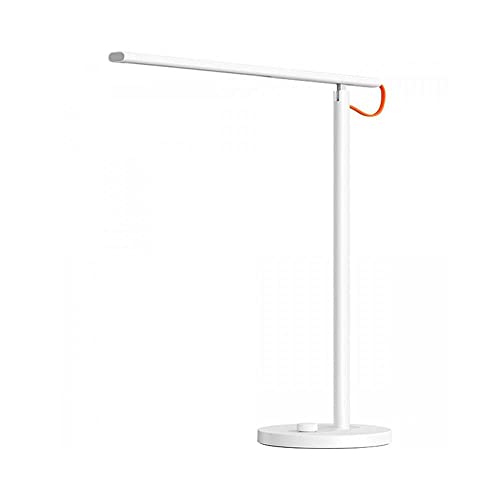
| Xiaomi Mi Smart LED Desk Lamp 1S desk lamp with iOS/Android… | XIAOMI | for a limited work or reading surface | Read the review |
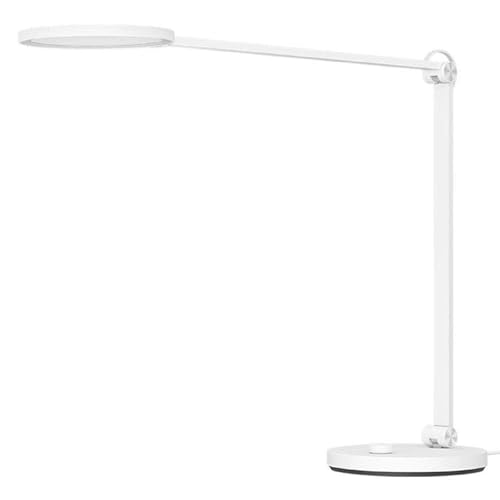
| Xiaomi Mi Smart LED Desk Lamp Pro | XIAOMI | for a limited work or reading surface | Read the review |
Our buying decision
Kary LED desk lamp 24 W with double head makes sense if you are looking for a lamp for a fixed workspace without a usable table edge, have checked the dimensions at the intended spot and actually use the functions named in the listing. The purchase is less convincing if you expect a universal solution for several conflicting lighting tasks.
Keep looking if key data such as dimensions, light output, IP rating or compatibility is not clearly documented for your intended use. The same applies if you only like the look of the design, but the cable, the floor space or the controls would get in your way in daily use.
We deliberately award no stars. A numerical score would suggest a measurement accuracy that does not exist without documented hands-on testing. The statement this page can support is narrower: which details are available, what the model may be suited for, and which questions remain open before you buy?
Frequently asked questions about the desk lamp
How much space does the base need?
The metal base stands freely on the surface and, unlike a clamp, needs no table edge. Measure the footprint next to the keyboard or monitor stand before you plan the lamp in.
Who is a base better for than a clamp?
For glass tops, very thick table edges and rented flats where nothing may be screwed on. In return, a clamp saves surface space and is the better choice on small tables.
How bright is the lamp really?
That cannot be said from the available sources. The listing gives 24 watts and a colour rendering index above 90, but neither lumens nor lux on the work surface, and no manufacturer document exists.
What does the USB port deliver?
The listing mentions a charging port on the base but gives no output power. Whether it is enough for a tablet or only for a phone is therefore open and should be asked about before buying.
Sources and currency
The sources are ranked by their closeness to the product: manufacturer documents come before retailer or comparison data. A shop listing is useful for the variant currently on offer, but it is not an independent check. Missing documents are not replaced with invented experiences.
- Amazon product listing B0CKRJXGKB; product data via the Creators API, retrieved 24 July 2026 Advertisement
Content checked on 27 July 2026. Prices, availability and product variants can change independently of this page. For a final check, always use the current retailer listing and any available manufacturer documents.
If a linked source is no longer reachable, or the model on offer visibly differs from the product image and designation, this analysis is no longer the right basis for a decision. In that case the current model number is what counts. Tell us about the difference via the contact page (in German), so that the data, the link and the recommendation can be checked.