Does the model suit your lighting task?
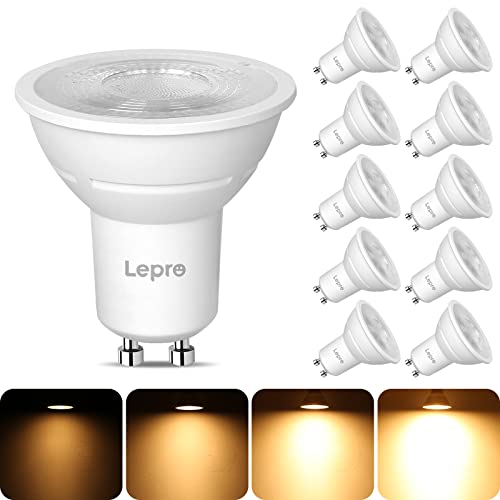
Lepro GU10 LED 4.5 W with 345 lumens and 2700 K, 10-pack stands in this selection for replacing existing GU10 spotlights on 230 V, with unresolved dimmability despite claims to the contrary. That is a narrower and more honest statement than a blanket “good” or “bad”. A lamp can be technically decent and still disappoint in the wrong place. That is why this review starts with the intended use, not with a score.
A light bulb does not decide where the light falls, only how much of it there is and in what colour. The direction is set by the existing lamp, and the beam angle limits how wide an area below is lit. It is therefore worth looking at the lamp itself before buying: a narrow spot in a ceiling track turns more lumens into a brighter patch, not a brighter surface.
For this model there are 5 readable product features from the Amazon listing. They are not presented as independently confirmed measured values. We explicitly separate what the source states from our practical assessment. We do not claim any long-term, laboratory or room trials of our own. We reproduce the quoted listing texts unchanged in content, but apply the house style for punctuation: dashes become a colon or comma, ranges are written out with “to”, and special characters and advertising symbols are removed. Numbers, units and statements are left untouched.
Product data and sources
| Product | Lepro GU10 LED 4.5 watt with 345 lumens and 2,700 kelvin, pack of 10 |
|---|---|
| Brand | Lepro |
| Category | Home lighting |
| ASIN | B0B4MT6V86 |
| Sources as of | 7 August 2026 |
| Type of research | Data and source analysis; no laboratory or long-term trial of our own |
Listing claim: Energy-saving & long-lasting
What the source says: [Energy-saving & long-lasting]: The 4.5W GU10 LED lamps offer bright light at minimal energy consumption. With up to 15,000 hours of lifetime you save on electricity costs and reduce frequent lamp changes, sustainable and cost-efficient.
Why it matters: The holder keeps later choices open, but requires a suitable combination of form, maximum power, colour temperature and, where relevant, dimmability. The figure also appears in the data sheet environment, but the value it depends on is missing. Lepro itself writes on its own page that the 15,000 hours depend on the number of switching cycles, but nowhere states that number. For its comparable ten-pack, Philips enters 50,000 switching cycles. At three operating hours a day, 15,000 hours last about 13 years by calculation, provided the lamp does not die from switching.
Listing claim: Dimmable & flexible
What the source says: [Dimmable & flexible]: Continuously dimmable light (10 to 100%) allows individual brightness for a cosy atmosphere or concentrated work. Compatible with most electronic LED dimmers.
Why it matters: Dimmable is only a usable statement once the method of operation, steps and possible compatibility are clarified. With a light bulb, the existing dimmer must also suit the LED. The EU product data sheet that Lepro stores on the product page of this lamp carries the value No in the Dimmable line. It belongs to model identifier PR200084-WW-EU-10-a and EPREL number 1471946, where it also says NO. A second registration in the same register, number 1286522 for model identifier PR200084-WW-EU-10, gives the same 345 lumens, the same 4.5 W and the same 38 degrees, but there it says YES. Until Lepro resolves this, the dimmability of this lamp is not documented but merely claimed. The German sentence is shorter than the English one on Lepro's own British page, and it is the warning that is missing: there Lepro expressly rules out halogen dimmers and lamps with three-step touch control. Neither version names a dimming principle, and neither gives a minimum load. Ten lamps are 45 W and, at a displacement factor of 0.70, at least around 64 volt-amperes, which gets tight in a window of typically 3 to 60 W of LED load as soon as the dimmer sits in a multiple combination.
Listing claim: Highest light quality & easy on the eyes
What the source says: [Highest light quality & easy on the eyes]: Flicker-free, glare-free light protects the eyes and provides relaxed lighting for reading, working or relaxing.
Why it matters: This claim comes from the sales listing and should not be read as a medical effect. A reliable assessment would need measurement methods and limits that a shop listing often does not state in full. The flicker half of this statement is in fact well supported by the data sheet: a flicker metric of 0.2 and a stroboscopic effect metric of 0.1 are clearly better than the 1.0 and 0.4 that the Philips register entry gives for the comparable lamp. Both are, however, measured at full load, and say nothing about dimmed operation. The lamp is not glare-free: the same data sheet says anti-glare shield No, and 600 candela in a 38-degree cone is a point light source that you should not look into.
Listing claim: Natural colour rendering
What the source says: [Natural colour rendering]: With 2700K warm white, 345 lumens and CRI >80, colours are shown clear, vivid and true to life. The 38° beam angle provides focused, even illumination.
Why it matters: The amount of light can only be assessed together with beam angle, distance and the surface being lit. A high figure alone does not say whether the light arrives in the right place. Focused and even are a contradiction at 38 degrees. The peak luminous intensity of 600 candela gives around 267 lux directly under the spotlight at 1.50 metres and around 104 lux at 2.40 metres, and brightness falls off towards the edge of the cone. A row of such spotlights creates a pattern of bright and darker zones and does not replace a ceiling light that lights the whole surface.
Listing claim: Easy installation & versatile application
What the source says: [Easy installation & versatile application]: Standard GU10 cap for quick, tool-free installation. Ideal for ceiling lights, pendant lights, wall lights, desk lamps, kitchen, living room, bedroom, office, restaurant, café and more. No mercury, no UV or IR light, safe for your family and the environment.
Why it matters: The holder keeps later choices open, but requires a suitable combination of form, maximum power, colour temperature and, where relevant, dimmability. The note is correct, but it leaves out the point at which the purchase fails. GU10 runs on 230 V without a transformer, the similar-looking GU5.3 holder on 12 V behind a converter, and a GU10 lamp never belongs in a holder wired for 12 V. Oddly, both EPREL entries for this lamp give AC interface as the cap type and not GU10, so the cap cannot be looked up in the official register, of all places. The Philips entry for the comparable lamp gives GU10 there.
Use in daily life
Light bulb, lamp and control form a system. A matching lamp holder alone is not enough. Light output, colour temperature, dimmability and an existing dimmer must also fit together.
For this model, the purchase decision should therefore hinge on a concrete situation. Before buying, write a sentence such as: “I need light for …” and add place, time of day and activity. If the model does not clearly fulfil this task, an alternative from the same category is probably the better choice.
A light bulb is neither hard-wired nor charged, so bathroom zones and electrical installation drop out as purchase hurdles. What matters instead is whether cap, shape and installation depth fit the existing lamp. With dimmable models, the dimmer already fitted comes into play: it must support the type and reach its minimum load, otherwise the light flickers or cannot be dimmed all the way down.
Strengths and limits of the assessment
What speaks for the model
- Product image, ASIN and listing data are clearly linked to one another.
- The form of the product can be assigned to a specific lighting task: for replacing existing GU10 spotlights on 230 V, with unresolved dimmability despite claims to the contrary.
- The available features allow a targeted check before buying, without inventing a star rating.
What remains open
- No long-term use of our own, no light measurement and no documented load check.
- Listing details can be abbreviated or change with variants and model updates.
- Room effect, glare and ease of use depend on your location and daily routine.
The sore point is dimmability, and it lies not in the listing text but in the official register: two EPREL entries for the same model identifier give opposite answers, and the product data sheet that Lepro itself links on the sales page of the dimmable lamp says No. Anyone buying ten lamps to connect them to an existing dimmer is therefore buying a risk that the supplier has itself documented without resolving it. In addition, Lepro names no dimming principle, no minimum load and no switching cycles, although the brand expressly ties the lifetime to the switching cycles. Without a dimmer in the circuit the package is unremarkable: class F is correct on recalculation, the halogen replacement is covered by the regulation's reference table, and the flicker values are better than with the branded counterpart.
What you should measure and check before buying
Before ordering, pull out an old lamp and look at the cap: two stout pins with locking means GU10 and 230 V, two thin pins without a twist means GU5.3 and 12 V, and then this pack is the wrong one. Next, count how many of the ten holders actually hang on a shared switch, because only that number times 4.5 W is the load a dimmer would see. If there is a dimmer in the circuit, read its data sheet and look for the range for mains-voltage LED load as well as for the deduction for multiple combinations and drywall installation. Finally, measure the installation depth above the ceiling, because according to the data sheet the lamp is 53 millimetres high at a diameter of 50 millimetres, and the holder comes on top of that.
- Define the task: Write down which surface or zone is to be lit and at what time of day you use it.
- Measure the space: Check cap, bulb length and diameter against the space in the existing lamp. Floor space, cable route and socket do not apply to this design. Product photos are no substitute for dimensions.
- Compare the light data: Check light output, colour temperature, dimming and, if needed, IP rating in the current listing or manual.
- Think through the controls: The switch, app, sensor or remote control must be reachable and understandable in daily use at the planned location.
- Check the variant: Colour, size, set contents and lamp holder can differ within a listing. Compare the variant you choose with this analysis.
If you are unsure how much light your room needs at all, work it out once: the lumens-to-watts chart translates wattage figures into actual brightness, and how many lumens per room are needed depends on area and activity. Further models from this area are in the overview under home lighting, and the lighting calculator translates your room into a concrete target brightness.
Set-up, position and first check
Assign each lamp to exactly one task. Then check colour temperature, controls and possible glare in the evening. For permanently installed lamps, the installation instructions must match the existing connection; improvised solutions are not a good basis.
After set-up, do not judge the light only in daylight. In the evening, switch the rest of the lighting as you normally use it, and check the situation from seated, standing and walking height. Only then do disturbing reflections, hard shadows or an unfavourable switch position become visible.
Keep the instructions and the model designation. This helps with spare parts, with a later query about the product and in a guarantee claim. The light bulb and lamp holder remain replaceable, so a later change of brightness or colour temperature is possible.
Comparison with similar models
The comparison does not name winners. It shows models of the same category so that you can see whether one of them is closer to your lighting task. If two models have the same task in the Assessment column, they do not differ in purpose but in design, dimensions and features. The column then states what is actually different according to the sources.
| Model | Brand | Assessment | Details |
|---|---|---|---|
| Lepro GU10 LED 4.5 watt with 345 lumens and 2,700 kelvin, pack of 10 | Lepro | for replacing existing GU10 spots on 230 volts, with unclear dimmability despite claims to the contrary | This review |
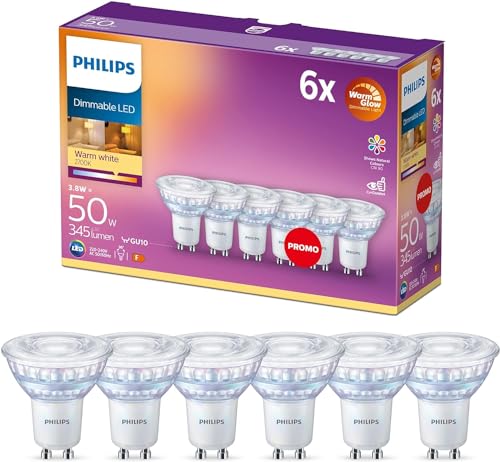
| Philips LED Classic GU10 Warm Glow bulbs, 6-pack | Philips | for an existing, technically compatible lamp holder | Read the review |
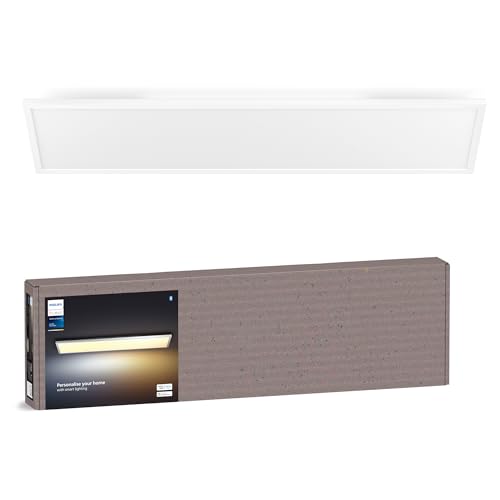
| Philips Hue White Ambiance Aurelle smart LED panel light | Philips Hue | for ambient lighting where the room and mounting size suit | Read the review |
Our buying decision
Lepro GU10 LED 4.5 W with 345 lumens and 2700 K, 10-pack makes sense if you are looking for a light bulb for replacing existing GU10 spotlights on 230 V, with unresolved dimmability despite claims to the contrary, have checked the dimensions at the intended location and actually use the functions named in the listing. The purchase is less convincing if you expect a universal solution for several conflicting lighting tasks.
Keep looking if key data such as dimensions, light output, IP rating or compatibility is not clearly documented for your intended use. The same applies if you only like the look of the design, but the cable, the floor space or the controls would get in your way in daily use.
We deliberately award no stars. A numerical score would suggest a measurement accuracy that does not exist without documented hands-on testing. The statement this page can support is narrower: which details are available, what the model may be suited for, and which questions remain open before you buy?
Frequently asked questions about the light bulb
Is this lamp dimmable or not?
The brand's documents contradict each other, and they do so in the official register. EPREL number 1286522 for model identifier PR200084-WW-EU-10 says yes, number 1471946 for model identifier PR200084-WW-EU-10-a says no, with otherwise identical 345 lumens, 4.5 W, 38 degrees and 600 candela. Of all things, Lepro links the sheet that says no on the sales page of the dimmable lamp. Dimmability is therefore not documented, and the regulation's data sheet template would even have offered the fitting third value, namely only with specific dimmers.
Which dimmer fits, and are ten lamps enough as a load?
Lepro names neither leading-edge nor trailing-edge dimming nor a minimum load, although on its British page the brand at least rules out halogen dimmers and lamps with three-step touch control. By calculation, ten lamps come to 45 W, and a dimmer such as the Gira System 3000 universal LED dimmer insert typically handles 3 to 60 W of LED load, but deducts 20 per cent of that when it sits in a multiple combination, which leaves 48 W. The minimum load is rarely a problem with modern inserts, because it usually applies only without a neutral conductor and not to LED loads. If in doubt, split the ten lamps across two circuits and read your dimmer's data sheet beforehand.
What do 345 lumens at 4.5 W mean for the efficiency class?
The simple quotient gives 76.67 lumens per watt and therefore apparently class G, because class F only begins at 85. However, Regulation (EU) 2019/2015 calculates with a factor that is 1.176 for directional light on mains voltage, and with it the lamp reaches 90.2 lumens per watt and sits squarely in class F. The class F stated on the label and data sheet is therefore correct, and the Philips ten-pack is practically level at 90.8 lumens per watt.
Does the lamp fit my holder, and what about GU5.3?
GU10 has two stout pins, is pushed in and locked with a quarter turn, and connects directly to 230 V. GU5.3 has two thin pins, is only pushed in and runs on 12 V behind a converter, and a GU10 lamp never belongs there. The regulation's reference table shows how different the two worlds are: a 50 W halogen in PAR16 form on mains voltage delivers 300 lumens, whereas a 50 W MR16 on low voltage delivers 540. Anyone coming from a 12 V ceiling therefore expects almost twice as much light as this lamp delivers.
Does it really replace a 50 W halogen lamp?
According to the regulation yes, and you can check it by calculation. The reference luminous flux for a 50 W PAR16 lamp is 300 lumens in a 90-degree cone, multiplied by the correction factor of 1.02 that results from the lumen maintenance of 0.96, giving 306 lumens. Lepro declares 345 lumens in the narrow cone and is therefore around 13 per cent above that. Oddly, Lepro does not make exactly this equivalence statement in its own data sheet, and fills the line with a dash instead.
How bright is it under a spotlight like this?
Peak luminous intensity is the right figure for that, and the data sheet gives it as 600 candela. Directly under the spotlight this gives around 267 lux on a worktop 1.50 metres below and around 104 lux on the floor 2.40 metres below, in each case at the centre of the cone and falling off towards the edge. For a kitchen worktop that is a solid basis, but for evenly lit surfaces you need either more spotlights or a different type of fitting.
Sources and currency
The sources are ranked by their closeness to the product: manufacturer documents come before retailer or comparison data. A shop listing is useful for the variant currently on offer, but it is not an independent check. Missing documents are not replaced with invented experiences.
- Listing text for ASIN B0B4MT6V86: 4.5 W, 345 lumens, 2700 K, colour rendering index above 80, 38 degree beam angle, up to 15,000 hours of lifetime, continuously dimmable from 10 to 100 per cent, compatible with most electronic LED dimmers, ten pieces. The listing names no dimming principle, no minimum load and no number of switching cycles. Amazon listing B0B4MT6V86, not linked
- Lepro product page for exactly this ten-pack, article number 200084-WW-EU-10, with energy efficiency class F. The specification list gives 4.5 W equal to 50 W halogen, dimmable yes, 345 lumens, 220 to 240 V alternating voltage, 2700 K and 38 degrees. Further down, the same table contradicts itself with the entry permitted voltage frequency 100 to 120 V and 60 Hz as well as control type touch, controller type button and connection technology infrared. The footer names Lepro Innovation GmbH, Ernst-Heinkel-Ring 5-7, 85662 Hohenbrunn.
- EU product data sheet that Lepro stores on exactly this product page: model identifier PR200084-WW-EU-10-a, supplier LE Innovation Limited in Dublin, trademark LEPRO/LE/LIGHTINGEVER. It gives 4.5 W, 345 lumens in the narrow 90-degree cone, 2700 K, class F, 5 kilowatt hours per 1000 hours, colour rendering index 80, R9 equal to 10, peak luminous intensity 600 candela, half-intensity angle 38 degrees, displacement factor 0.70, lumen maintenance 0.96, lifetime factor 1.00, flicker metric 0.2, stroboscopic effect metric 0.1. The Dimmable line says No.
- EPREL registration 1471946 for model identifier PR200084-WW-EU-10-a, in the register since 10 February 2023: 345 lumens, 4.5 W, class F, directional, mains voltage, half-intensity angle 38 degrees, peak luminous intensity 600 candela, colour consistency 2 MacAdam ellipses, cap type AC interface. The Dimmable entry reads NO.
- EPREL registration 1286522 for model identifier PR200084-WW-EU-10, that is, exactly the shop's article number, in the register since 21 June 2022: the same 345 lumens, the same 4.5 W, the same class F, the same 38 degrees and 600 candela, colour consistency 6 MacAdam ellipses. The Dimmable entry reads YES here.
- EPREL registration 2684056 for model identifier PR200084-WW-EU-5, the five-pack of the same series, in the register since 7 April 2026: 400 lumens at the same 4.5 W, class F, 38 degrees, 600 candela, Dimmable NO. The same base model number therefore carries two different luminous fluxes.
- Lepro product page for the identical ten-pack on the British market. The dimming bullet point there is longer than the German one and expressly rules out two cases: not compatible with lamps with three-step touch control and not compatible with halogen dimmers. The German bullet point omits both exclusions and ends after the half sentence about electronic LED dimmers.
- Delegated Regulation (EU) 2019/2015 in full text. Annex II: the efficiency class results from the useful luminous flux divided by the power consumption, multiplied by the factor from table 2, which is 1.176 for directional light on mains voltage; class F runs from 85 to below 110 lumens per watt. Annex V, table 4: for a 50 W PAR16 reflector lamp on mains voltage the reference luminous flux is 300 lumens, whereas for a 50 W MR16 GU 5.3 on low voltage it is 540 lumens. The data sheet template expressly provides the third value only with specific dimmers for the Dimmable line.
- Gira System 3000 universal LED dimmer insert Standard, manufacturer's operating instructions. Connected load at 25 degrees Celsius: incandescent lamps and mains-voltage halogen 20 to 210 W, mains-voltage LED and compact fluorescent lamps typically 3 to 60 W. Power reduction 10 per cent per 5 degrees above 25 degrees, 15 per cent when installed in a timber or drywall partition, 20 per cent in multiple combinations. The minimum load of 50 W applies only when operating without a neutral conductor and expressly not to mains-voltage LED loads.
- EPREL registration 387358 for the comparable Philips ten-pack, whose data sheet we have already evaluated: 355 lumens at 4.6 W, class F, 36 degrees, 700 candela, flicker metric 1.0 and stroboscopic effect metric 0.4. The cap type line there says GU10 and not AC interface.
- Amazon product listing B0B4MT6V86; product data via the Creators API, retrieved 7 August 2026 Advertisement
Content checked on 10 August 2026. Prices, availability and product variants may change independently of this page. For the final check, always use the current retailer listing and any available manufacturer documents.
If a linked source is no longer reachable, or the model on offer visibly differs from the product image and designation, this analysis is no longer the right basis for a decision. In that case the current model number is what counts. Tell us about the difference via the contact page (in German), so that the data, the link and the recommendation can be checked.