Does the model suit your lighting task?
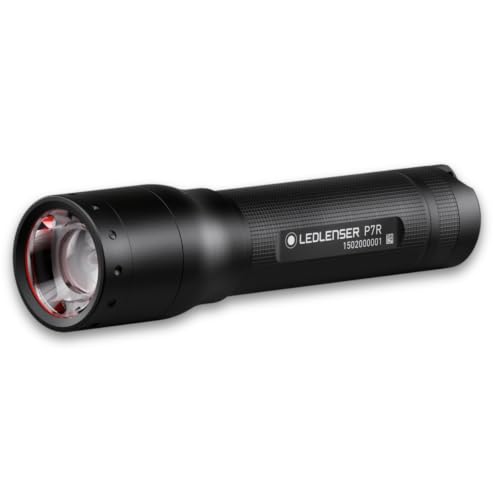
Ledlenser P7R rechargeable torch stands in this selection for camping, the garage and walks with a focusable beam. It is not intended for continuous use at full power, nor for rain or immersion. That is a narrower and more honest statement than a blanket “good” or “bad”. A lamp can be technically decent and still disappoint in the wrong place. This review therefore begins with the intended use, not with a score.
The key quantity is the energy in the battery. According to the data sheet the battery has 2,200 milliamp hours at 3.7 volts, which gives 2,200 times 3.7 divided by 1,000, equal to 8.14 watt hours. In Power mode with a run time of 2 hours, that is by calculation about 4.1 watts, which hardly fits 1,000 lumens, because it would imply about 245 lumens per watt. In Mid Power it is 250 lumens over 5 hours (about 154 lumens per watt), in Low Power 20 lumens over 40 hours (about 98 lumens per watt). According to the manufacturer the measured values are to ANSI FL1 and in individual cases deviate by up to 15 per cent.
For this model there are 5 readable product features from the Amazon listing. They are not presented as independently confirmed measured values. We explicitly separate what the source states from our practical assessment. We do not claim any long-term, laboratory or room trials of our own. We reproduce the quoted listing texts unchanged in content, but apply the house style for punctuation: dashes become a colon or comma, ranges are written out with “to”, and special characters and advertising symbols are removed. Numbers, units and statements are left untouched.
Product data and sources
| Product | Ledlenser P7R rechargeable torch |
|---|---|
| Brand | Ledlenser |
| Category | Home lighting |
| ASIN | B016P27MGG |
| Sources as of | 2 November 2026 |
| Type of research | Data and source analysis; no laboratory or long-term trial of our own |
Listing statement: Rechargeable & always ready for use, the Ledlenser P7R…
What the source states: Rechargeable & always ready for use, the Ledlenser P7R impresses with a convenient Floating Charge System. Thanks to a practical charge indicator (red = charging, green = full), the torch is always to hand and runs on rechargeable battery power.
Why this matters: For everyday use, runtime, charging method and behaviour at low battery level matter more than mobility alone. These values should be checked in the current manual or listing.
Listing statement: Powerful brightness with 1,000 lumens, light up…
What the source states: Powerful brightness with 1,000 lumens, light up your surroundings with an impressive 1,000 lumens. The lamp reaches a beam distance of 210 metres and offers up to 40 hours of light, ideal for outdoor adventures or emergencies.
Why this matters: The amount of light can only be assessed together with beam angle, distance and illuminated area. A high figure alone does not yet say whether the light arrives in the right place. According to the data sheet, the 1,000 lumens and the 210 metres of beam distance apply only in Power mode, in which the run time is given as 2 hours. In Low Power mode it is 20 lumens and 40 metres. Both are manufacturer measurements to ANSI FL1 with a spread of plus/minus 15 per cent. According to the data sheet, the 40 hours belong to Low Power mode with 20 lumens and not to the 1,000 lumens from the same sentence. In Power mode it is 2 hours, in Mid Power 5 hours. By calculation, 8.14 watt hours over 2 hours gives about 4.1 watts, and that is hardly compatible with 1,000 lumens.
Listing statement: Individually adjustable light, thanks to the Smart Light…
What the source states: Individually adjustable light, thanks to Smart Light Technology you can choose between three light modes: Power, Mid-Power and Low Power. Save energy, extend the run time or enjoy glare-free light when reading and working.
Why this matters: For the assessment, what counts is whether this feature brings a concrete advantage in daily use. Without a suitable lighting task, it remains mainly a data sheet point.
Listing statement: Patented Advanced Focus System, switch effortlessly…
What the source states: Patented Advanced Focus System, switch effortlessly from a wide close-range light to a sharply concentrated long-range light. The reflector lens enables precise illumination for every situation, perfect for professional use and outdoor adventures.
Why this matters: This statement describes a product feature, but does not yet answer whether it is practical for camping, the garage and walks with a focusable beam. What matters is the link to the planned location.
Listing statement: Fast focus & focus lock function, with the Rapid…
What the source states: Fast focus & focus lock function, with Rapid Focus technology you adjust the beam in a flash. The Focus Lock function fixes the current focus so that you can keep the perfect light intensity at all times.
Why this matters: This point should be checked against the dimensions, instructions and existing installation before you buy. A listing can contain variants or shortened wording.
Use in daily life
In use, what counts: the lamp needs no socket to operate, as it runs from the rechargeable battery. For charging, according to the data sheet a USB cable is included, the plug type is not stated, and the charging time is 300 minutes. The lamp is 158 millimetres long defocused and 166 millimetres focused, weighs 210 grams with battery and has a switch at the end. It is held, carried with the wrist strap or in a belt pouch, and a hook for hanging in the tent is not documented.
For this model, the purchase decision should therefore hinge on a concrete situation. Before buying, write a sentence such as: “I need light for …” and add place, time of day and activity. If the model does not clearly fulfil this task, an alternative from the same category is probably the better choice.
What the lamp is not built for: it is not a tent lantern with even all-round light, because it concentrates or spreads a beam from the front. It is not waterproof, as the data sheet states IPX4 and thus splash protection, not immersion. Nor is it a lamp for continuous light at full power, which according to the manufacturer lasts 2 hours. With 6000 to 8000 kelvin and a colour rendering index of 65, the light is cool white and of little use for judging colour.
Strengths and limits of the assessment
What speaks for the model
- Product image, ASIN and listing data are clearly linked to one another.
- The design can be matched to a specific lighting task: for camping, the garage and walks with a focusable beam, not for continuous use at full power and not for rain or immersion.
- The available features allow a targeted check before buying, without inventing a star rating.
What remains open
- No long-term use of our own, no light measurement and no documented load check.
- Listing details can be abbreviated or change with variants and model updates.
- Room effect, glare and ease of use depend on your location and daily routine.
A purchase mostly fails on the expectation that 1,000 lumens and 40 hours come together. Anyone who wants to use the lamp for longer than two hours at full power will be left in the dark with a flat battery. The second typical mistake is to take the lamp for dustproof or rainproof because of IP54 in the title, although the manufacturer states IPX4. Added to that is confusion with later P7R versions, which have different values and connections.
What you should measure and check before buying
Before buying, check on the box or in the description for the article number 9408-R or 9608-R and the year 2017, so that you do not get a later P7R generation with different values. Read in the listing which charging connection and battery type are named, and calculate the run time only for the mode you really use: 8.14 watt hours divided by the power of the mode. Check whether an IP rating is stated, and read it literally as IPX4.
- Clarify the task: Clarify whether you need a handheld torch with reach or a lantern with all-round light for the tent. These are two different classes of device.
- Mode and run time: Calculate the run time for the mode you really use: 2 hours Power, 5 hours Mid Power, 40 hours Low Power according to the data sheet.
- Battery and charging: Check battery type 18650 with 2,200 milliamp hours and the charging connection, as a USB-C connection is not documented.
- IP rating: Read the IP rating literally: the data sheet states IPX4, the listing IP54. Trust the manufacturer document.
- Check the variant: Check article number 9408-R or 9608-R and the year 2017, so that you do not get a later P7R version with different values.
If you are unsure how much light your room needs at all, work it out once: the lumens-to-watts chart translates wattage figures into actual brightness, and how many lumens per room are needed depends on area and activity. Further models from this area are in the overview under home lighting, and the lighting calculator translates your room into a concrete target brightness.
Set-up, position and first check
When setting up, what counts: charge the battery fully before first use, get a spare if you need the lamp for more than one evening, and set the mode to Low or Mid if you need light for more than two hours. When focusing you move the head, and according to the listing the Focus Lock function holds the setting. Do not place the lamp into the charging connection wet.
After set-up, do not judge the light only in daylight. In the evening, switch the rest of the lighting as you normally use it, and check the situation from seated, standing and walking height. Only then do disturbing reflections, hard shadows or an unfavourable switch position become visible.
Keep the manual and model designation. This helps with spare parts, with a later query about the product and in a guarantee claim. Replacing the light source is not intended; at the end of its lifetime the whole device is replaced.
Comparison with similar models
The comparison does not name winners. It shows models of the same category so that you can see whether one of them is closer to your lighting task. If two models have the same task in the Assessment column, they do not differ in purpose but in design, dimensions and features. The column then states what is actually different according to the sources.
| Model | Brand | Assessment | Details |
|---|---|---|---|
| Ledlenser P7R rechargeable torch | Ledlenser | for camping, the garage and walks with a focusable beam, not for continuous use at full power and not for rain or immersion | This review |
| Nitecore MT2A Pro torch | Nitecore | for a compact torch with USB-C rechargeable battery and AA emergency operation, without the 1,000 lumens on AA cells and without continuous use at the highest mode | Read the review |
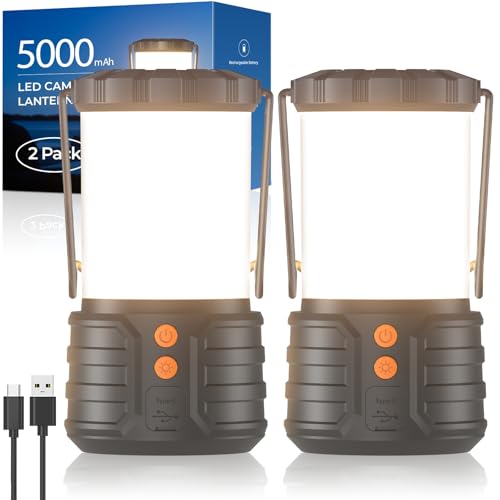
| PopoIron camping lantern, pack of two | PopoIron | for tent light and power cuts at home, with a reservation on the amount of light: the advertised 1,000 lumens and 6 hours do not add up by calculation | Read the review |
Our buying decision
Ledlenser P7R rechargeable torch makes sense if you are looking for a torch for camping, the garage and walks with a focusable beam, have checked the dimensions at the planned spot and will actually use the functions named in the listing. The purchase is less convincing if you expect a universal solution for several conflicting lighting tasks.
Keep looking if key data such as dimensions, light output, IP rating or compatibility is not clearly documented for your intended use. The same applies if you only like the look of the design, but the cable, the floor space or the controls would get in your way in daily use.
We deliberately award no stars. A numerical score would suggest a measurement accuracy that does not exist without documented hands-on testing. The statement this page can support is narrower: which details are available, what the model may be suited for, and which questions remain open before you buy?
Frequently asked questions about the torch
How bright is the Ledlenser P7R according to the manufacturer?
According to the manufacturer's data sheet it is up to 1,000 lumens in Power mode, 250 lumens in Mid Power and 20 lumens in Low Power. The values are average values measured to ANSI FL1 with a deviation of plus/minus 15 per cent, and we did not measure anything ourselves.
How long does the P7R battery last?
According to the data sheet it is 2 hours in Power, 5 hours in Mid Power and 40 hours in Low Power, with a battery of 2,200 milliamp hours and 8.14 watt hours. The 40 hours from the listing title apply only to the weakest mode with 20 lumens, not to 1,000 lumens.
Is the Ledlenser P7R waterproof?
No. The data sheet states IPX4, which means protection against splashing water from all directions, but not against water jets or immersion. The listing says IP54, and the manufacturer document does not support that. Waterproof would only be correct from a second digit of 7.
How is the P7R charged?
It is charged via the Floating Charge System, a charging connection with a red and green charge indicator, and according to the data sheet a USB cable is included. The document does not say which plug type is on the cable, and a USB-C connection is not documented. The charging time is 300 minutes according to the manufacturer, depending on the hardware used.
Is the P7R suitable as a camping lamp?
As a handheld torch for lighting paths and searching, yes, as a tent lantern only to a limited extent. According to the data sheet it has a focusable beam from defocused to sharply concentrated, but no hook and no diffuser. For continuous light in the evening, Low Power mode with 20 lumens is the only one with more than a day of run time.
Can I put normal batteries in the P7R?
Under usable batteries the data sheet lists CR123 at 3 volts, alongside the battery of type 18650. The run time figures relate to the supplied rechargeable battery, and for disposable batteries they are not covered. The document does not say whether the lamp stays equally bright in every mode with disposable cells.
Sources and currency
The sources are ranked by their closeness to the product: manufacturer documents come before retailer or comparison data. A shop listing is useful for the variant currently on offer, but it is not an independent check. Missing documents are not replaced with invented experiences.
- Product data sheet from the manufacturer Zweibrüder Optoelectronics for the Ledlenser P7R, article number 9408-R (gift box) and 9608-R (blister pack), earliest sales date 2 October 2017, retrieved 2 November 2026. It states for Power 1,000 lumens, 210 metres and 2 hours, for Mid Power 250 lumens, 150 metres and 5 hours, for Low Power 20 lumens, 40 metres and 40 hours. Further: battery 18650, Li-ion, 3.7 volts, 2,200 milliamp hours, 8.14 watt hours, charging time 300 minutes, IP rating IPX4, weight 210 grams with and 164 grams without battery, length 158 millimetres defocused and 166 millimetres focused, colour temperature 6000 to 8000 kelvin, colour rendering index 65, drop resistance from 1 metre, working temperature minus 20 to plus 40 degrees. Footnote 1: measured values according to ANSI FL1, in individual cases plus/minus 15 per cent. Status of the source: file from September 2017. Retrieved 2 November 2026.
- Listing page for ASIN B016P27MGG, retrieved 2 November 2026. The title states 1000 lm, 210 m beam distance, 40 h run time, IP54 and 210 g as well as the addition 2017, and writes the brand and name as P7. The bullet points, by contrast, name the P7R, a Floating Charge System with charge indicator (red charging, green full), three light modes Power, Mid-Power and Low Power, and Focus Lock. The listing is a seller's statement, not evidence. Amazon listing B016P27MGG, not linked
- Amazon product listing B016P27MGG; product data via the Creators API, retrieved 2 November 2026 Advertisement
Content checked on 2 November 2026. Prices, availability and product variants can change independently of this page. For the final check, always use the current retailer listing and any available manufacturer documents.
If a linked source is no longer reachable, or the model on offer visibly differs from the product image and designation, this analysis is no longer the right basis for a decision. In that case the current model number is what counts. Tell us about the difference via the contact page (in German), so that the data, the link and the recommendation can be checked.